

| Spring Bamboo Shoots Program | Unveiling the Manufacturing Process of Resin Adhesives |
| Release time:2025-09-29 10:09:39 | Views: |
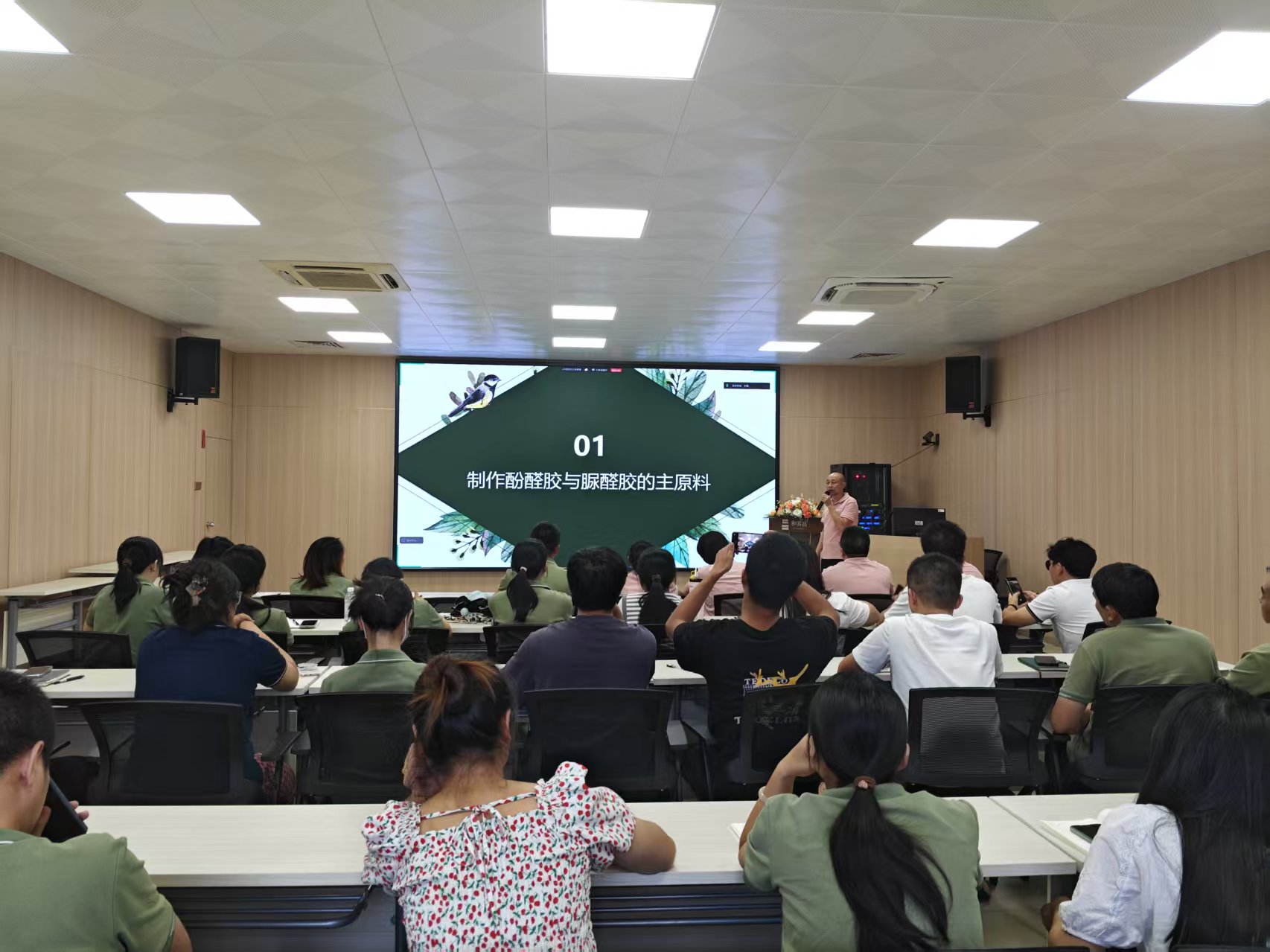
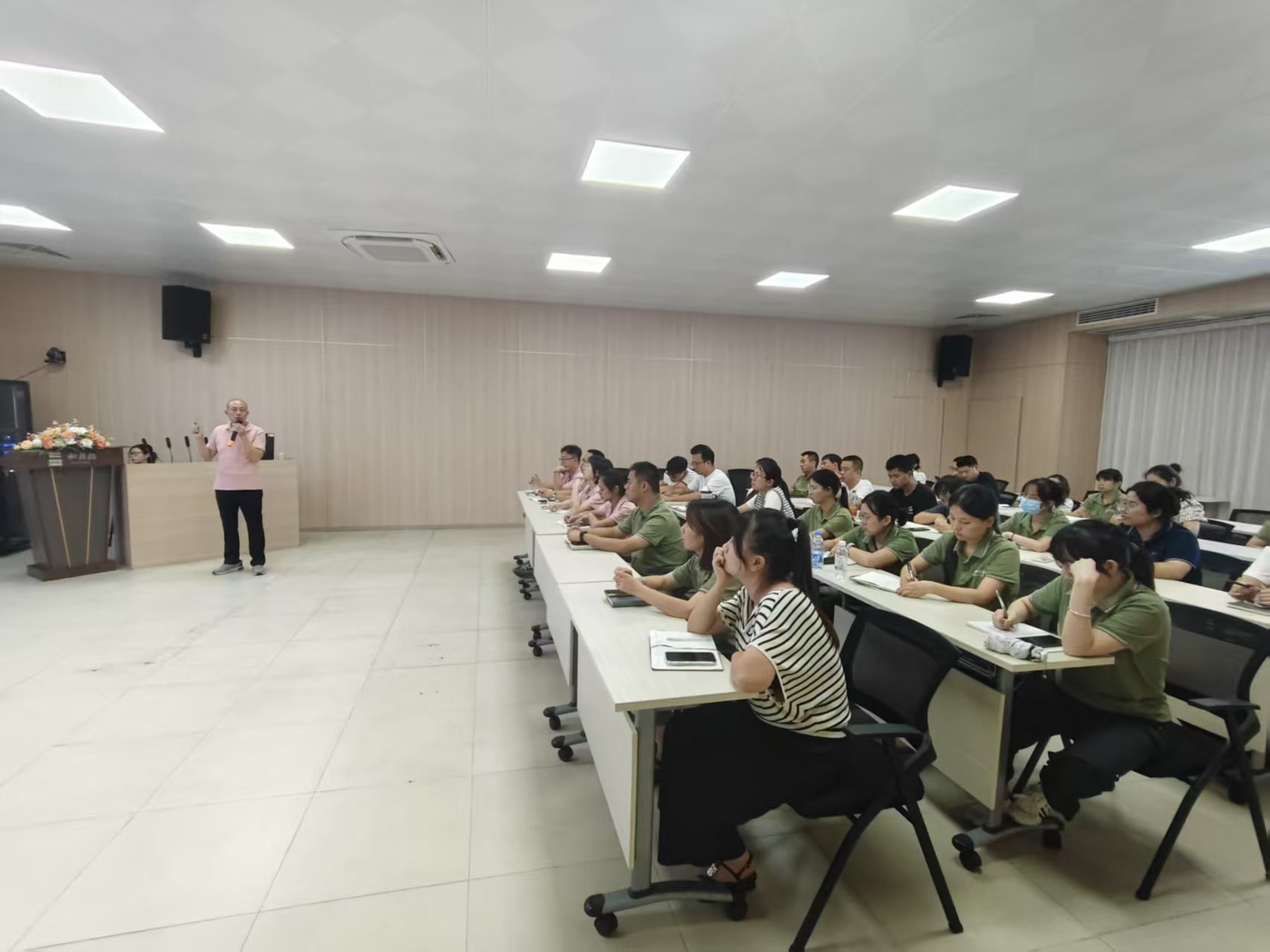
To further enhance employees' professional competence and drive the company's sustainable development, the Spring Bamboo Shoots Academy commenced its scheduled session on September 28. This installment featured a lecture by Yu Qinghe, General Manager of the Resin Business Division, who delivered a specialized training session on the overview of resin adhesive manufacturing. In the classroom, Mr. Yu led the participants through the development history of resin adhesives in an accessible yet rigorous manner. Urea-formaldehyde resin, first introduced into China's wood processing industry in 1948, gained widespread adoption by the 1960s. Today, it accounts for over 80% of adhesives used in wood processing and is extensively applied in fields such as plywood and fiberboard. Phenolic resin achieved large-scale production in 1958, playing a significant role in wood processing, construction, and other industries. With technological advancements, it has evolved into various products, including water-soluble, alcohol-soluble, and mixed-solvent types.
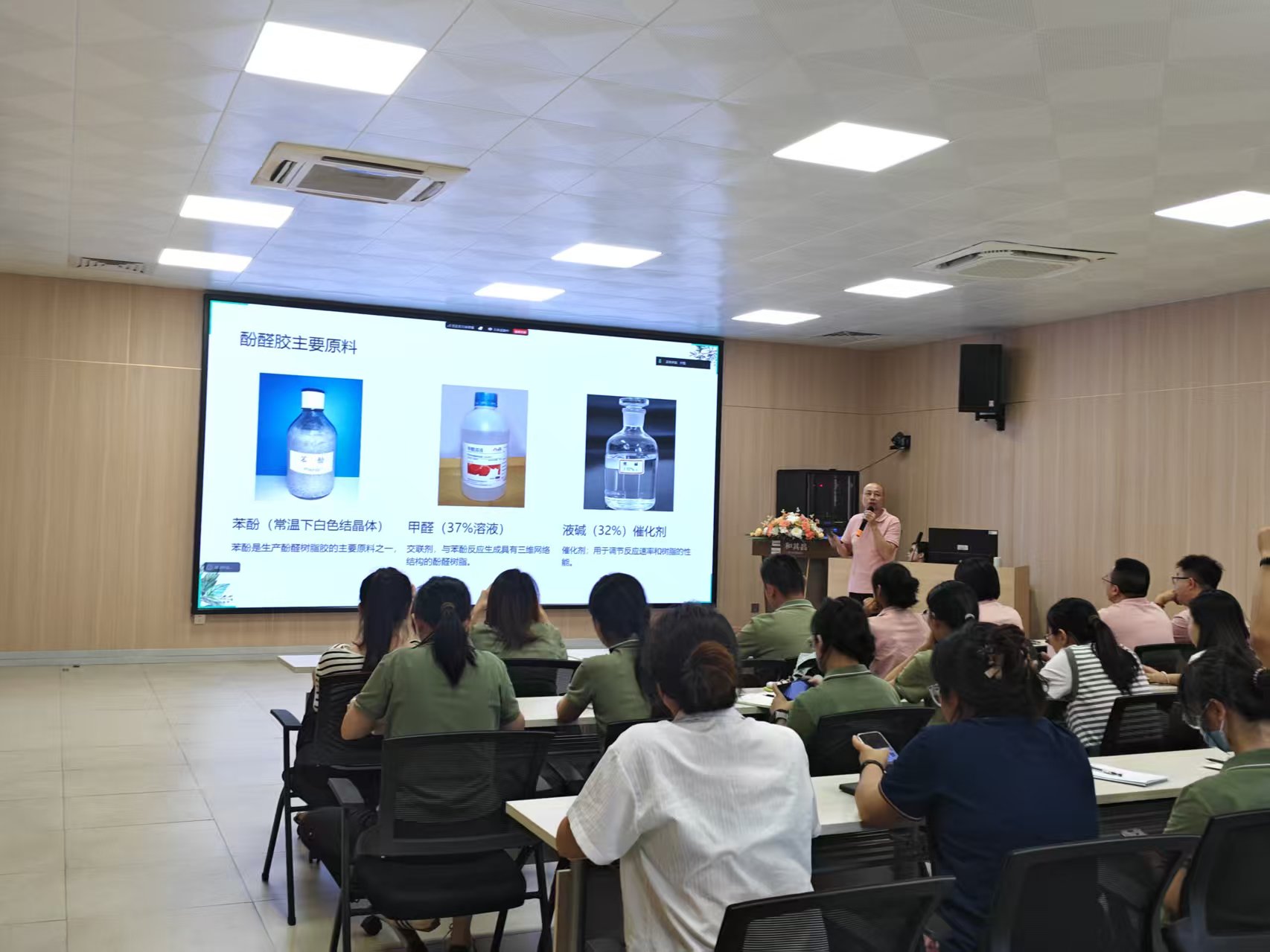
During the lecture, Mr. Yu also emphasized the applications and precautions of key raw materials such as phenol, formaldehyde, urea, and melamine. From the wide-ranging uses of phenol in pharmaceuticals and industrial materials to the critical roles of formaldehyde in textiles, wood processing, and chemical industries, and the applications of urea and melamine in agriculture and industrial sectors, Mr. Yu provided a detailed analysis. He reminded everyone to strictly adhere to operational standards to avoid exposure to hazards. Subsequently, the course delved into the technical aspects. The reaction process of phenolic resin adhesive is characterized by unique polycondensation reactions, while the preparation of urea-formaldehyde resin adhesive involves two stages: weakly alkaline and acidic. Strict temperature control and pH adjustments during the process are particularly crucial. Factors influencing adhesive quality depend not only on the raw materials themselves but also on precise control over proportions and processes. The training further extended to the application of phenolic resin adhesives in the electronics industry, such as circuit board manufacturing, electronic packaging, and thermally conductive insulating materials, broadening the participants' understanding.
Through this training session, participants gained a more systematic and comprehensive understanding of resin adhesives and further recognized the importance of materials science in industrial development. Talent is the foundation of corporate growth, and learning is the driving force behind continuous progress. As a key platform for talent development at Heqichang, the Spring Bamboo Shoots Academy will continue to provide diverse and professional learning opportunities, helping employees expand their knowledge horizons, enhance their comprehensive capabilities, and grow alongside the company. |
Xiamen Heqichang New Materials Technology Co., Ltd.
Address: Unit 02, Room 1403, No. 99-4 ZhiGu East 1st Road, Xike Town, Tong'an District, Xiamen City, Fujian Province, China

Tmall flagship store

Official WeChat

Alibaba