

| Spring Bamboo Shoots Program | A Training Record on the Manufacturing Process of Bamboo-Wood Composite Container Floorboards |
| Release time:2025-09-26 17:52:18 | Views: |
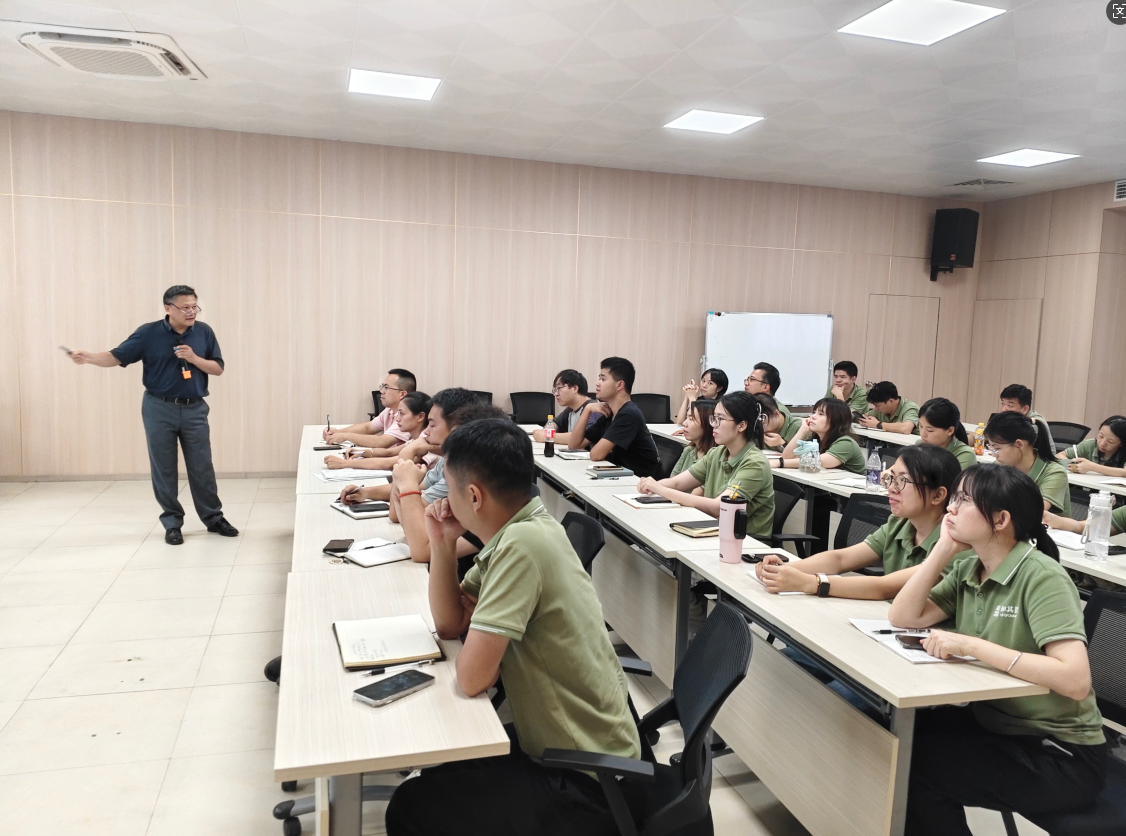
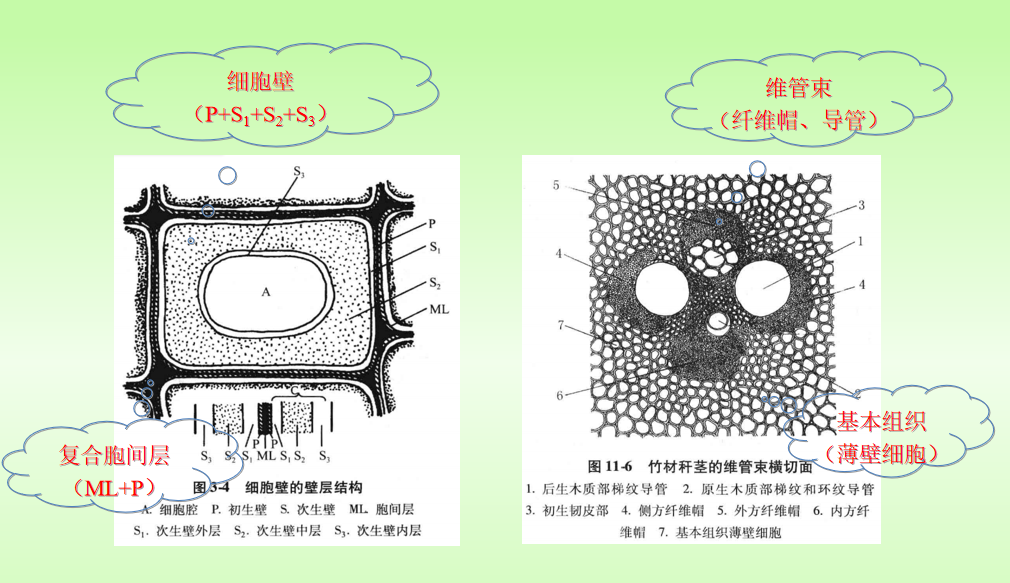
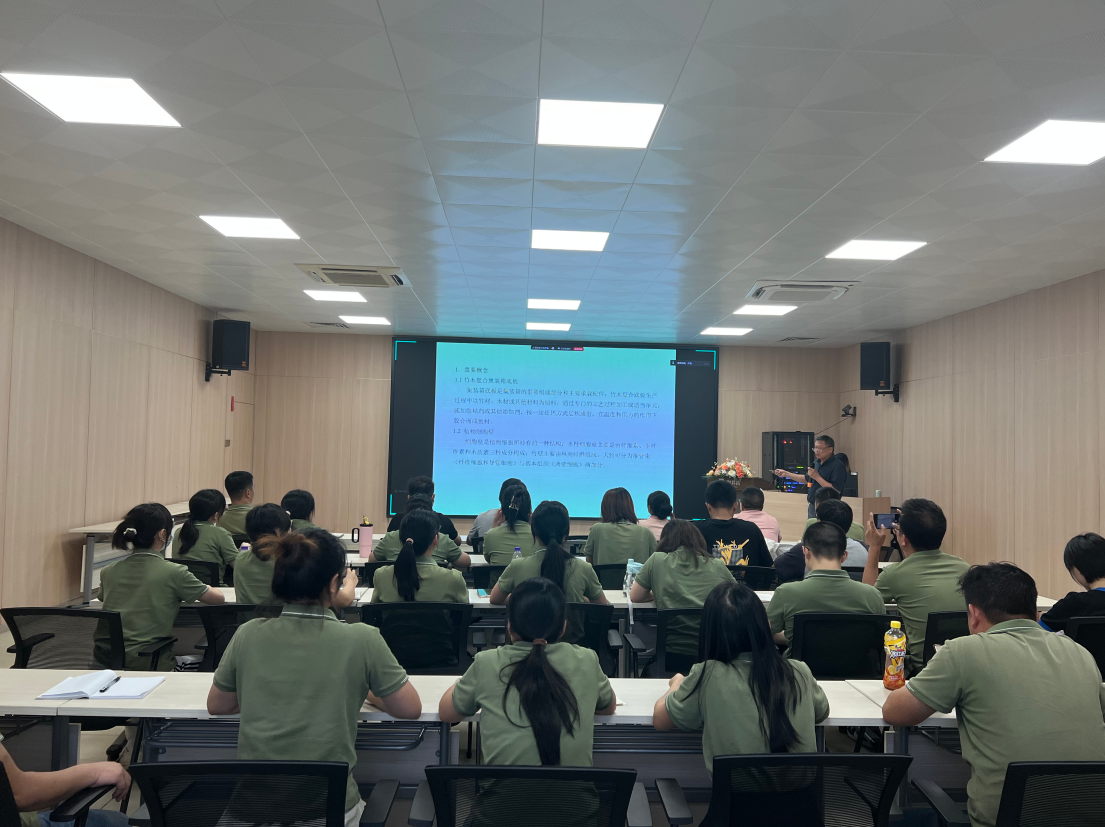
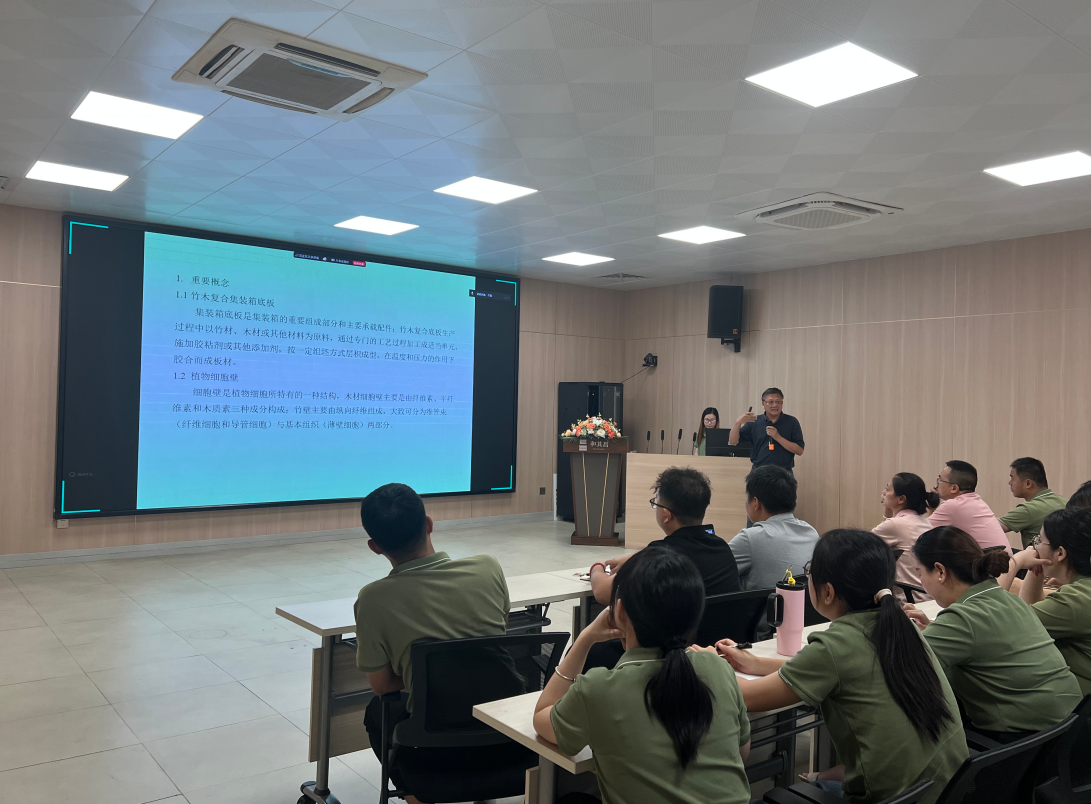
The company consistently places high importance on talent cultivation, adhering to the principle that learning drives personal growth, and growth solidifies the company's future. On September 25, the Spring Bamboo Shoots Academy specially invited Dr. Hou Lundeng, the company's R&D consultant, to deliver a thematic training session titled "Manufacturing Process of Bamboo-Wood Composite Container Floorboards." This session aimed to broaden participants' professional perspectives and strengthen their theoretical foundations through in-depth learning. During the training, Dr. Hou first introduced the concept of bamboo-wood composite container floorboards. As a critical component and main load-bearing part of containers, these floorboards are manufactured through complex processes such as drying, gluing, layering, and hot pressing, using raw materials like bamboo and wood. Drawing on the structural differences in plant cell walls, he provided an accessible explanation of the physical and chemical characteristics of bamboo and wood, helping participants understand the fundamental reasons behind the durability and toughness of container floorboards.
In the discussion on raw and auxiliary materials, Dr. Hou elaborated in detail on the physical properties of bamboo and wood, including density, moisture content, and shrinkage-swelling behavior, as well as chemical components such as cellulose, hemicellulose, and lignin. He emphasized the critical role of adhesives in the manufacturing process, noting that factors such as polarity, wettability, pH levels, and the selection of organic or inorganic fillers are closely related to the quality of the boards. Through this content, participants gained a more intuitive understanding of how "materials determine performance."
Subsequently, Dr. Hou focused on explaining the principles of bonding and the main manufacturing processes. Using the theories of physical bonding and chemical bonding as starting points, he analyzed the intricacies of interfacial interactions during the bonding process and introduced the dry forming technique commonly adopted in the industry today. From drying and adhesive application to dipping, layering, and hot pressing, each step plays a crucial role in ensuring the stability and reliability of the final product. The training also extended to the selection of process parameters and future development trends, highlighting how mechanization, automation, and intelligence are gradually driving bamboo-wood composite materials toward greater efficiency and controllability.
Through this training, employees not only deepened their understanding of the manufacturing process of bamboo-wood composite container floorboards but also gained a profound appreciation for the driving force of technological innovation in enterprise development. The learning atmosphere was vibrant, and discussions were enthusiastic. Participants unanimously expressed significant gains from the session, noting that they not only acquired more professional knowledge but also felt increasingly confident in the company's technological prospects. In the future, the Spring bamboo Shoots Academy will continue to carry out diverse learning activities, treating training as an "essential course" for employee growth. By continuously enhancing comprehensive competencies and professional capabilities, the academy will support the simultaneous realization of personal value and the high-quality development of the enterprise. Let learning become the deepest cultural foundation of the company, and let hard work shine as the brightest trait of every employee. |
Xiamen Heqichang New Materials Technology Co., Ltd.
Address: Unit 02, Room 1403, No. 99-4 ZhiGu East 1st Road, Xike Town, Tong'an District, Xiamen City, Fujian Province, China

Tmall flagship store

Official WeChat

Alibaba